
Summary
What this article covers in 30 seconds
- A poll found 62% saw insufficient rationale as the biggest barrier to right-first-time suitability.
- 38% pointed to fact-finding and risk assessment issues.
- Tick-box reviews can create unclear ratings and combative adviser relationships.
- AI-driven insight with expert oversight can turn reviews into learning and improvement.
Video insight
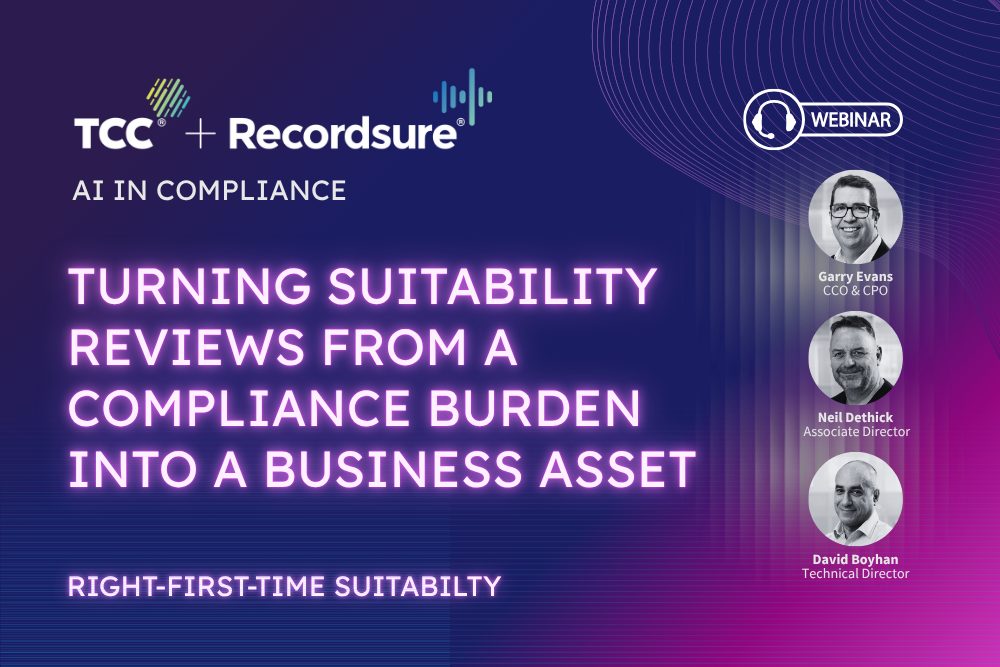
TCC and Recordsure opened their AI for compliance webinar series with a focus on suitability reviews, an area where many wealth managers struggle to get files right first time.
Garry Evans hosted the session with David Boyhan, TCC’s Technical Director, and Neil Dethick, TCC’s Operations Director. The discussion explored how firms can move away from tick-box checking and towards reviews that improve adviser performance and customer outcomes.
Poll findings on unclear suitability
A live poll asked attendees to identify the biggest barrier to ensuring suitability is right first time. Adviser attention to detail received 0%. Insufficient or contradictory fact-finding or attitude-to-risk determination received 38%. Insufficient rationale for the recommendation received 62%. Something else received 0%.
Neil Dethick said the result matched his team’s day-to-day experience. He said insufficient rationale is the most common reason for a file to be rated unclear. Issues include alternative options not being fully discounted, discussed or evidenced, taxation issues not being fully covered and inconsistencies between fact-finding and suitability reports.
The poll question asked: “What’s the biggest barrier in ensuring suitability is right first time?” Neil Dethick said the result aligned with his experience across tens of thousands of suitability reviews.
The poll options also included adviser attention to detail and something else, both of which received 0%. The session used the result to start a wider discussion about factfinding, attitude to risk determination and recommendation reasoning.
Why suitability reviews miss the mark
Suitability checks are often treated as an administrative exercise. Advisers may receive unclear ratings without detailed feedback, creating frustration and combative relationships with compliance colleagues.
Reviews can also be too narrow, focusing on individual cases or products and missing wider themes. That prevents firms from spotting recurring weaknesses. Efforts to reduce costs and accelerate reviews can backfire if they deliver quick results without meaningful developmental insight.
Neil Dethick described tick-box checks as giving an instant sugar rush in speed and handling time, but limited risk mitigation or development potential if the results are taken at face value.
Neil Dethick said that, in his experience, suitability checks often provide very little meaningful feedback or insight on top of the file rating. That lack of clarity can make it harder for advisers to understand why an unclear or unsuitable rating was applied.
He also said the bigger picture can be lost where firms focus on individual cases and narrow-scope themed reviews. That can lead to failure to identify key themes and trends.
The hidden costs
One hidden cost is adviser rework. When files are returned as unclear without constructive guidance, advisers spend unprofitable time remediating cases instead of serving clients.
Detailed feedback signposting where issues sit can prevent the same issue recurring in future cases. The opportunity is to turn reviews into learning rather than friction.
AI-driven insights, combined with expert oversight, can provide clear feedback that helps advisers understand what went wrong and why. Thematic analysis can also reveal systemic issues in fact-finding, risk assessment or adviser training, allowing firms to address root causes.
Risk-based sampling can create further issues. Where sampling is poorly implemented, sample sizes can be too small or the scope too narrow. The resulting evidence may be stilted, ineffective or inconclusive, limiting root-cause analysis.
Those hidden costs grow when suitability reviews repeatedly send cases back without enough guidance. That can reduce adviser capacity for client work and make it harder to achieve lasting improvement.
A better way forward
Suitability reviews that encourage a right-first-time mindset become more than a compliance necessity. Review outcomes can improve customer outcomes, reduce cost and reframe compliance as an enabler of business growth.
Neil Dethick reinforced this point: reviews with little meaningful feedback can leave advisers unclear on why an unclear or unsuitable rating was applied, creating resistance to developmental change. He also warned that risk-based sampling can be poorly implemented where sample sizes are too small or scope is too narrow, leaving little evidence for root-cause analysis.
Recordsure uses AI technology with TCC’s regulatory expertise to help firms move beyond tick-box compliance and support better outcomes for advisers and clients.
The full first section of the webinar is available online.
Neil Dethick linked unclear ratings to alternative options not being fully discounted, discussed or evidenced, taxation issues not being fully covered, and inconsistencies between fact-finding and suitability reports. Clearer feedback and thematic analysis can address these problems.
The session spotlight was therefore on shifting suitability review activity from an administrative source of friction into a value-adding process that strengthens outcomes for advisers and clients alike.
Frequently asked questions
The poll found 62% selected insufficient rationale for the recommendation, while 38% selected fact-finding or attitude-to-risk issues.
They may provide speed but little meaningful feedback, leaving advisers unclear on ratings and limiting development.
Unclear files can create unprofitable adviser time spent on rework or remediation when cases are returned without constructive guidance.
AI-driven insights can help identify themes and support clearer feedback, while expert oversight explains what went wrong and why.